Map layouts, difficulty picks and placement strategies for every stage, plus which maps farm coins fastest.
Cameraman Tower Defense Maps: Layouts and Tips
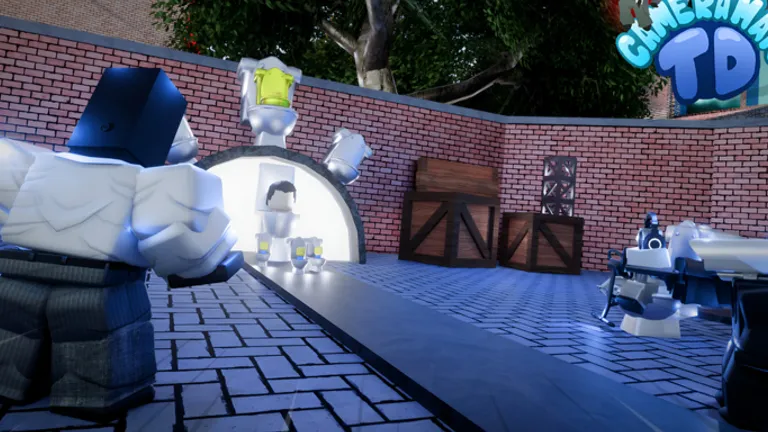
Cameraman Tower Defense publishes no map data: no names, no counts, no layouts from the developer. The official screenshots show desert arenas built from brick walls, crates, raised unit platforms, and a defined walkway. This page covers how to read a new arena on sight and where placement tends to pay off. None of the layout detail below is officially documented.
What is documented, and what is not
The developer confirms the pieces a map is built from without naming a single arena. The description says "Step on a platform to start a match!" and "Place cameraman and powerful units to fight back against invading toilets!", so platforms and unit placement exist by design. Beyond that there is nothing official: no map list, no layout images beyond the store screenshots, and no difficulty-to-map pairing. Fan wikis run maps guides, but their layouts are undated and unverified, and this page links none of them.
One developer-published hint does exist. The active code "NewMaps" is a string the developer put into the world, and this game's codes track its update cycle — RELEASE and UPDATE1 expired, NewMaps stayed active — so map additions ship with builds. How many maps exist right now is not documented, and no source names them. The dated identity block and stats sit on the wiki page.
Reading the official screenshots
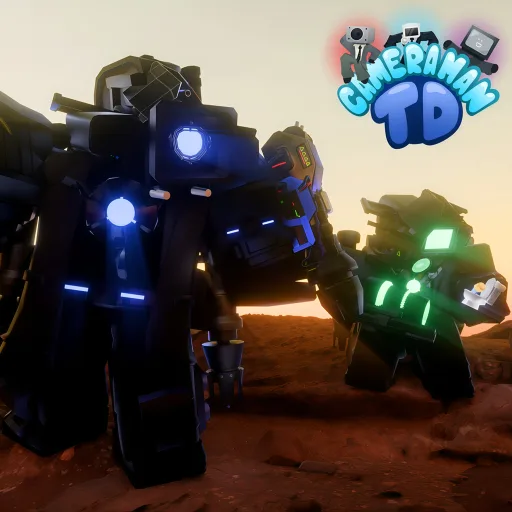
The official art is the best layout source available, and it shows desert arenas with a consistent kit of parts. Brick walls mark arena boundaries and block building. Crates pile along the walkway and read as blocked ground rather than placement tiles. Raised platforms hold the unit spots, and a defined walkway runs between them, which is the path the toilet waves travel. The map view in the official icon shows a platform ring, the same kind of platform you step on to start a match.
To read a new arena on sight, walk the path yourself before placing anything and mark three things: every bend, every junction where paths split or merge, and every long straight. Placement budget is highest at bends and junctions because a unit there covers more of the same path, and long straights are the cheapest spot to defend. Then note the crates, because they tell you where you cannot build at all.
The arena descriptions on this page come from the official store screenshots and the official description, not from any developer map list. Fan wikis publish maps guides, but their layouts are undated and none of them is linked here.
Official source: Cameraman Tower Defense on Roblox — the official screenshots and description quoted on this page.
What the crates and walls tell you
Read the props as build rules rather than decoration. Brick walls close an arena, which matters on the arenas where the walkway doubles back near a wall, because a unit placed against the wall covers the return leg of the path for the same price as a straight. Crates mark blocked tiles and sit along the walkway, which means the buildable line is usually offset from the path itself rather than running down its centre.
The raised platforms carry the unit spots, and the platform ring visible in the official icon is the same platform you step on to start a match. That is worth internalizing before your first placement: the hub and the arena share a visual language, so the pieces you see in the lobby are the pieces you will be building around. When a new arena loads, spend the pre-wave seconds matching the crates and walls against the walkway instead of copying a placement from a different map.
Placement laws that hold on any map
The following is general tower defense strategy, not developer data, and it applies to every arena in this genre. Place at bends first, junctions second, long straights third. Cluster units that share an upgrade path, and spread units whose coverage overlaps, so you are not paying twice for the same stretch of walkway.
The spending order matters more than the exact spot on a fresh map. Cover the early path with the cheapest useful unit, add an economy unit as soon as the wave pace allows it, then upgrade existing coverage before opening new lanes. Community sources cast Scientist Cameraman as the economy unit and Engineer as the spawner, and Engineer is developer-confirmed by its code name. Keep a coin reserve for mid-wave emergencies, because a leak at the halfway point costs more than any upgrade you skipped at wave one. The role-sorted roster lives on the units page.
Difficulty and reward framing
Because the map list is undocumented, the repeatable question is really a difficulty question. Community-reported settings — Hard or Challenge, Insane, and Endless — are where players farm, and the general principle is that a clear you can finish quickly on a harder setting beats wipes on the hardest one. Coin rewards per map are not published, so the numbers in this section are strategy framing rather than game data, and the insane mode guide covers the top end with the same labels.
The confirmed coin sources are the three active codes at 50 Coins each, plus the 200-Coin reward for joining the Aligators Games group and liking the game. The codes were cross-checked across the October 4-8 window by ProGameGuides, Destructoid, and urGameTips, and the codes page tracks that head start with per-source check dates. What changes between maps beyond it — enemy density, path length, boss placement — is not documented.
Co-op coverage on big servers
Servers hold up to 30 players, so map coverage is usually a team job on the harder settings. Split the arena by lane and let each player own one, with one or two players on economy and spawners so the team can afford late-wave upgrades. When a lane leaks, reassign the covering player instead of everyone rebuilding on the same bend, and keep one player holding reserve coins for emergency placements mid-wave.
Two practical notes for big lobbies. Placement overlaps are the usual failure, because four players instinctively build the same bend and leave a long straight uncovered, so agree on a lane split before the first wave rather than during it. And because the community-reported mode list includes Solo, a fresh map can always be scouted alone first, then repeated with a team once you know where the crates and walls funnel the path.
That is advice, not data. It is built on the two confirmed facts that matter for maps — the placement loop from the description and the 30-player server cap — and the arena details come from the official screenshots. The first-hour walkthrough on the beginner guide shows the same loop at normal pace.
FAQ
How many maps are in Cameraman Tower Defense?
Not documented by the developer. Community sources publish maps guides, but no official count exists and their layouts are undated. The developer-published code "NewMaps" implies maps have been added over time.
What is the best map for coins?
There is no official answer. Community-reported advice is to repeat a clear you can finish quickly on a harder community-reported difficulty. Coin rewards per map are not published, so treat any specific farming map claim as unverified.
Where can I place units on a map?
On the placement platforms and open ground visible in the official screenshots, with brick walls and crates reading as blocked. The match itself starts by stepping on a platform, per the official description.
Do updates add new maps?
The active code "NewMaps" is a developer-published string that implies map additions ship with updates, and this game's codes track its update cycle. The October 10, 2026 build's contents beyond the "Legends came back.." banner are not documented.
Related Guides
- Cameraman Tower Defense Insane Mode - the hardest community-reported setting and how to build for it
- Cameraman Tower Defense Codes - the 150-Coin head start before your next clear
- Cameraman Tower Defense Beginners Guide - the first hour, from platform step to first clear
- Cameraman Tower Defense Wiki - every documented fact about the game in one place
More Cameraman Tower Defense Guides
What changed in the October 10 update, the Legends return banner, new units and how patches shift codes and the unit meta.
Community unit values for collection and trading talk, with rarity, demand notes and how values shift after each update.
Verified hub for the Aligators Games tower defense game: stats, modes, units, codes and wave basics in one page.