
Runner strategy for Huss Valley: survive the crossings, farm Gems on the map, juke the Chaser and pick abilities that keep you alive.
Huss Valley Runner Guide: Survive and Win
Winning as a Runner in Huss Valley means three clean crossings of the arena while one knife-wielding Chaser converts everyone they touch. One hit ends your run and hands you a knife instead, so every technique on this page serves a single goal: manage the gap between you and that blade until the third crossing is yours.
The good news is that the Runner side has structural advantages the game builds in. You are faster laterally than the Chaser can chase, the map pays you for moving — Gem pickups dot the routes — and match rewards go to both teams, so even a converted round contributes to your progression.
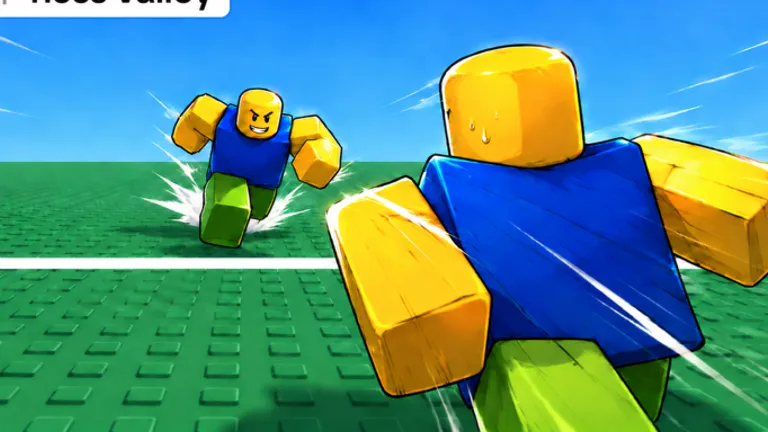
The Three-Crossing Structure
Matches are not a single sprint. Runners need three separate crossings, and rounds between crossings are where conversions happen. The practical implication: pace your risk. Early crossings happen against a fresh, fast Chaser with a full lobby of fellow targets — use other Runners as distractions and take conservative routes. By the third crossing, converted players have swollen the hunter side, but the remaining Runners split attention too.
What this means in practice:
- Crossing one is free if you are patient. Wait for a second Runner to draw attention, then take a clean lane.
- Crossing two is the trap round. The Chaser has learned everyone's habits; this is where most knives land. Save a dash and an escape option for it.
- Crossing three is chaos management. Fewer runners remain, but a scattered field gives you angles. Watch where other survivors are running and go where the pressure is not.
Official source: Huss Valley on Roblox — the win condition comes from two written guides that agree: Runners win by crossing three times without being caught, and one knife hit converts you to the hunting side.
For a second opinion on survival priorities, aprasi's runner guide covers the same role from a route-planning angle, and Pro Game Guides documents the ability costs this page references.
Movement: Your Real Defense
The controls page covers the inputs; this is where they become survival. The knife is a melee-range weapon, which means every chase is a geometry problem:
- Dash across, never away. Spacebar dash only moves you left or right while holding A or D. Dashing across the Chaser's approach forces a turn; dashing in a straight line just delays the swing.
- The instant stop is your best juke. Alt kills your momentum dead. A Chaser committing to your trajectory overshoots hard when you vanish from it — stop, reverse, and the gap you lost comes back doubled.
- Never run predictable lines. The Chaser is learning your habits while you run. Vary when you dash, not just where — a habit of dashing on approach is a habit that gets punished by a patient hunter.
The most repeatable juke in the game needs no ability: run a slightly too-clean line, let the Chaser commit to the swing, stop instantly, and dash the opposite direction during their recovery. It works because the knife swing costs the Chaser more than your fake cost you.
Gem Pickups: Route Planning Pays
Gems spawn as map pickups, and guides note they make the Runner side the easier farming role. But every pickup is a temptation with a cost model: a Gem sitting near the Chaser's patrol is not free, it is bait you pay for in risk.
Route thinking that works:
- Pickups on your crossing line are free money. Collect what your path already touches.
- Detours need a safety margin. If the detour puts the Chaser between you and your next crossing, skip it — one match's Gems never outweigh conversion risk.
- Late rounds change the math. With fewer Runners alive, the Chaser hunts you specifically; this is the time to skip pickups entirely and take clean lines.
Between match rewards and pickups, the Runner side funds abilities steadily even without winning — which is why the grind feels gentle on this role.
Ability Picks for Runners
Two purchases dominate the current shop for survival, both tracker-priced:
- Pocket Door, 400 Gems. A six-second door that hard-blocks the Chaser's path. It works even when you are being watched, which makes it the most consistent early buy.
- Cloak, 1,000 Gems. Three seconds of invisibility — but not invulnerability. The tracker's own note says you can still be hit, so Cloak belongs on turns and before crossings, where line of sight breaks anyway.
Emergency Airhorn (1,000 Gems) ranks lower because it needs aim under pressure, but it is the only Runner tool that physically pushes the Chaser back — a niche worth knowing about for players who prefer aggressive resets to evasion.
The Converted-Runner Mindset
Eventually it happens: a knife lands, and you are on the Chaser side for the rest of the match. Two things follow. First, you still earn match rewards, so the night's progression is not wasted. Second — and more useful — you now see the chaser role from the inside. Every habit that got you caught is a habit the surviving Runners probably share. Hunting them teaches you exactly what to stop doing next match.
The chaser guide covers that side in full, and reading it as a Runner is one of the fastest ways to improve: knowing what the knife wants shows you what to deny it.
Reading the Chaser: The Meta-Skill
Every technique above gets stronger once you stop reacting and start predicting. The Chaser has tells worth learning: a Leash wind-up before a pull, a beeline that means Rocket Shoes confidence, the way a smart hunter drifts toward your crossing line instead of your current position. None of these are documented mechanics — they are patterns you learn by dying to them once.
The highest-leverage habit is watching the Chaser's feet, not your own path. Your crossings are fixed; the variable is where the hunter chooses to wait. A Chaser who camps a choke expects you to come to them, so the counter is delay — let the round timer and the other Runners do the work while you hold a safe quarter of the map. Patience is a Runner stat, even if the scoreboard never shows it.
FAQ
How do you win as a Runner in Huss Valley?
Cross the arena three times without taking a knife hit. Matches pay both teams at the end regardless of result, but the three-crossing run is the win condition the whole role builds around.
What is the best Runner ability in Huss Valley?
By current tracker ranking, Cloak at 1,000 Gems, with Pocket Door at 400 Gems as the value pick most players should start with. Cloak breaks line of sight for three seconds; Pocket Door physically blocks the Chaser for six.
How do you juke the Chaser?
Dash across their path rather than away from it, use the Alt instant stop to make committed swings overshoot, and vary your dash timing so the Chaser cannot read you. None of the reliable jukes need an ability.
Do Gems on the map respawn?
Guides confirm pickups exist and are worth collecting, but respawn timing is not documented. Treat them as per-match income and never take a risky detour for one.
What happens when you get caught in Huss Valley?
One knife hit converts you: you leave the Runner side and join the Chasers for subsequent rounds. You still earn match rewards at the end either way — conversion changes your role, not your progression.
Related Guides
- Chaser guide: convert every runner — know the hunter's toolkit to deny it.
- Controls and movement basics — the verified inputs this page's patterns run on.
- Abilities: costs and best picks — the full shop with prices and priority marks.
- Tips: jukes, boosts and loadouts — the mistake list that pairs with this playbook.
More Huss Valley Guides
How to earn and spend Gems and Coins in Huss Valley: match rewards, map pickups and whether abilities or consumables come first.
Practical Huss Valley tips covering jukes, dash timing, ability loadouts and the mistakes that get Runners caught early.
Track Huss Valley updates: the Football vs Futbol event window, UPD-era changes and where official patch news is posted.