
Undertale Adventures X side modes explained: Raids, Gauntlet tokens, the AFK Chamber, daily and 30-minute Challenges, Infinite Mode and Trading Hub.
Undertale Adventures X Raids and Gauntlet
The story Acts are only part of Undertale Adventures X. The lobby has ten facilities, and six of them are side modes that pay different currencies: Raids, Gauntlet, AFK Chamber, Challenges, Infinite and PVP. This page covers what each one actually does, and flags the ones the game has not documented.
- Raids — separate encounters with their own rewards
- Gauntlet — area gauntlets that pay Toby Tokens plus area tokens
- AFK Chamber — timed item payouts
- Challenges — daily and 30-minute runs for evolution materials
- Infinite — endless scaling waves with leaderboards
- PVP — exists, rules undocumented
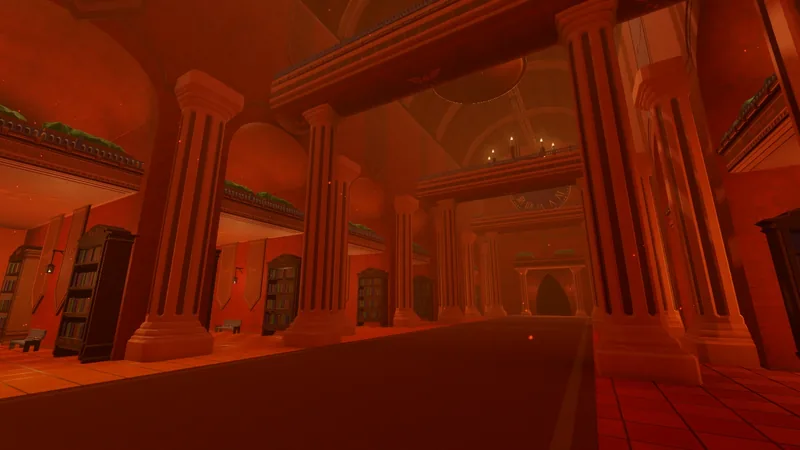
Raids
The community wiki's entry for Raids is short: "Raids is an important part of the Lobby. Here, you can attempt various Raids, each rewarding you differently."
That is the whole documented description. There is no published raid list, no boss names and no reward table, so this page does not invent any. What is safe to say:
- Raids are a separate content type from story Acts.
- They reward differently per raid, which means they are the place to look when a specific material is missing from Act drops.
- They sit in the lobby, so they are accessible without travelling.
If you are stuck on a material, check Raids before assuming the game has no source for it.
Gauntlet
Gauntlet is the mode with the clearest documented reward. The wiki states: "Here, you can attempt Gauntlets of the Story Areas and get Toby Tokens and tokens for their respective Area."
Two currencies follow from that sentence:
- Toby Tokens — a global Gauntlet currency.
- Area tokens — one per story area, earned by running that area's Gauntlet.
Area tokens are the interesting part, because they are the only documented currency that is tied to a specific zone. That makes Gauntlet the likely answer to "how do I get more of the thing that only Waterfall gives me" without grinding Waterfall Acts.
The Gauntlet is also a good difficulty check. If you can clear an area's Gauntlet, you are over-geared for that area's Acts, which means you can push to Act 6 for the better drop rates.
The AFK Chamber
The AFK Chamber is the lowest-effort mode in the game. The wiki describes it as a place where "you can wait for payouts every (x) seconds, which have various Items."
The interval is not published, and neither is the item pool, but the mechanic is straightforward: stand in the chamber, receive payouts. There is no reason not to use it while you are reading a guide, waiting for a friend, or between runs.
The practical habit is to end every session in the chamber rather than in the lobby's menu. It costs nothing and the payouts are items you would otherwise have to farm.
Challenges
The Challenges room has two modes, and they are meaningfully different:
- Daily challenge — harder, better rewards.
- 30-minute challenge — easier, smaller rewards.
The wiki describes the rewards as things that "help you progress in the game, such as generic evolution items," and adds an important constraint: the challenges require specific Units that are boosted by that challenge. If you bring the wrong team, you cannot clear it regardless of your Units' overall strength.
That constraint makes Challenges the one mode where reading the modifier matters more than reading your roster. Check which Units are boosted before you queue, and do not treat a failed challenge as a signal that your team is weak.
The 30-minute version is the easier of the two and still pays evolution materials. Clear it first, then attempt the daily with the resources you just earned.
Infinite Mode
Infinite is the endless wave mode. The wiki's description:
- It pays Souls, XP and Underpass XP, plus other materials.
- Enemies grow stronger with each wave, so surviving longer is the score.
- It has leaderboards and exclusive titles for top placements.
- It recommends bringing a farm-type enemy Unit.
The farm-type recommendation is the important detail. Infinite rewards income scaling, so an economy Unit that accelerates your board is worth more there than a pure damage Unit that peaks early.
Infinite is also the cleanest way to find your team's actual ceiling. Story Acts are fixed difficulty; Infinite is a slope. If you fall over at wave 12, that number is your real power level, and it is a better progress metric than "which Act am I on."
The mode scales until your team breaks by design. A team that clears Ruins Act 6 comfortably may still stall in the early teens. Use it to measure, not to farm, until your damage Unit has traits.
PVP and Trading Hub
Both facilities exist in the lobby, and both are under-documented.
PVP — the community wiki's page is still a placeholder, reading "Here, you can fight other players for (rewards) - both part and rewards is placeholder." The mode exists; its rules and rewards are not published. Do not plan progression around it.
Trading Hub — the lobby map lists it as a facility. No trading rules, restrictions or currency are documented. Treat it as a social space until the game explains otherwise.
Documenting what is missing matters here, because a page that invents PVP ranks or trading prices would send players into a mode with wrong expectations.
How the Side Modes Fit Together
The efficient weekly loop uses each mode for what it is actually best at:
| Mode | Best use |
|---|---|
| Story Acts | Souls, XP, Gold, area drops |
| Gauntlet | Area tokens and Toby Tokens |
| Raids | Specific rewards the Acts do not give |
| Challenges | Evolution materials |
| AFK Chamber | Free item payouts between sessions |
| Infinite | Measuring your ceiling, titles |
| PVP | Undocumented; skip for progression |
That is a healthier spread than grinding one mode, because the currencies do not overlap much. Acts give Souls and Gold; Gauntlet gives tokens; Challenges give evolution items; AFK gives miscellaneous items.
Unlocking and Requirements
The lobby lists all ten facilities from the start, but that does not mean all of them are usable immediately. Challenges explicitly require boosted Units, and Infinite requires a team that can survive scaling waves.
The practical unlock order for a new account is:
- Story Acts until you have a four-role team.
- AFK Chamber immediately, because it is free.
- 30-minute Challenge once your team can clear Ruins Act 6.
- Gauntlet for the area you are farming.
- Infinite to measure your ceiling.
- Raids and daily Challenges once your damage Unit has traits.
The beginner guide covers the first three steps in more detail, and the Souls guide covers the Act farming loop these modes supplement.
Sources and Further Reading
- The lobby facility map: the community wiki's lobby map
- The current code payout: GamesRadar's Undertale Adventures X code page
Official source: Undertale Adventures X on Roblox — the official description confirms the tower defense structure and the trait upgrade system.
Frequently Asked Questions
What are Raids in Undertale Adventures X? Separate lobby encounters that each reward differently. The game does not publish a raid list.
What are Toby Tokens? The currency earned from Gauntlets, alongside area-specific tokens.
How does the AFK Chamber work? It pays out items on a timer while you are in it. The exact interval is not published.
What is the difference between the daily and 30-minute challenge? The daily is harder and pays more; the 30-minute is easier. Both give evolution materials.
Can I do Challenges with any team? No. Each challenge boosts specific Units, and you need those Units to clear it.
Is PVP worth playing? It exists, but its rules and rewards are undocumented, so it is not a progression route.
More Undertale Adventures X Guides
Every Undertale Adventures X unit we could verify, sorted into all six rarity tiers from Common to Secret, plus how summoning and duplicates work.
All seven Undertale Adventures X areas in order, with the Act structure, Neutral and Genocide routes, area damage bonuses and the Corridor boss gimmicks.
Undertale Adventures TD is now Undertale Adventures X. What the rename means for old codes, guides and searches, and what is actually confirmed.